Solar mounting decisions are becoming more important as photovoltaic deployment accelerates worldwide. IRENA’s Renewable Capacity Statistics 2025 reported approximately 452 GW of new solar capacity added globally in 2024. That expansion increases demand for mounting systems that balance yield, durability, installation speed, and lifetime cost.
What is the difference between fixed and adjustable solar mounts? Fixed mounts hold panels at one permanent angle, usually selected for the site’s latitude, roof structure, and shading conditions. They have fewer moving parts, simpler maintenance, and generally lower upfront costs. A properly designed fixed system can perform reliably through rain, snow, wind, and seasonal temperature changes. It is not automatically the cheapest choice, however. Difficult roof access or poor orientation may reduce its practical value.
Adjustable mounts allow installers or owners to change the panel tilt manually or mechanically. This can improve seasonal positioning, especially on ground-mounted arrays with clear access. The benefit depends on labor, adjustment frequency, local weather, and electricity pricing. NREL’s PVWatts guidance shows that orientation and tilt strongly influence annual production, but real-world gains vary by location. A small theoretical gain may not justify repeated site visits.
The U.S. Department of Energy also emphasizes structural loading, corrosion resistance, and secure roof attachments in photovoltaic installations. These details matter more than a glossy specification sheet. A loose clamp can become an expensive problem. My cautious view is simple: fixed mounts suit predictable, low-maintenance projects, while adjustable mounts deserve consideration where seasonal optimization is practical. The “best” system still depends on engineering analysis, not marketing claims. Some project assumptions may prove wrong after shading and wind assessments.
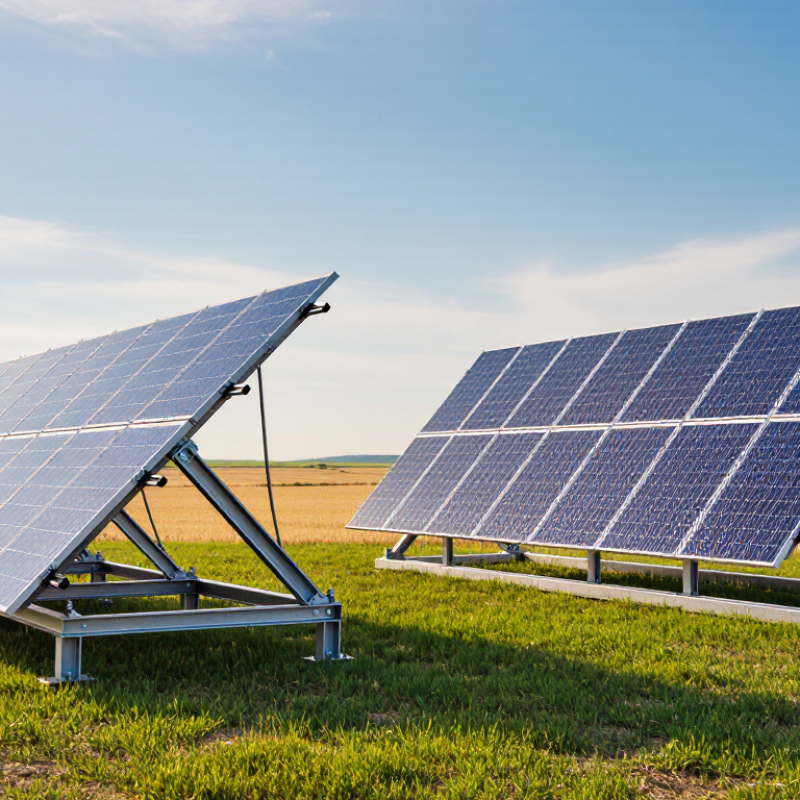
Fixed and adjustable solar mounts are support systems that hold photovoltaic panels at a selected angle.
A fixed mount stays in one position after installation. It is commonly attached to a roof or a ground frame. Its tilt usually follows the roof design or the site’s average sunlight direction. This structure has fewer moving parts, which can reduce maintenance needs and installation complexity. It must still be checked for roof strength, drainage, wind exposure, and local snow loads.
Adjustable mounts allow the panel angle to change manually or mechanically.
An owner may raise the tilt during winter and lower it during summer. This can improve sunlight capture when the seasonal sun path changes. However, the extra hinges, locking points, or actuators require careful inspection. Dust, rust, loose bolts, and incorrect settings can reduce performance. Small details matter.
A practical choice depends on the site, not only the panel output.
A fixed frame may suit a shaded-free roof with limited access. An adjustable frame can help on open ground where maintenance is safe and seasonal changes are worthwhile. In my experience, adjustment is often overestimated because owners may not change the angle regularly. A professional installer should measure orientation, calculate structural loads, and explain realistic energy gains. The best design may be less efficient on paper but easier to operate reliably. kombisa
A fixed solar mount holds panels at one permanent tilt and direction. Its rails attach to roof anchors, ground posts, or a weighted base. The structure does not track the sun. Instead, installers select an angle that suits local latitude, roof geometry, and seasonal sunlight. That simplicity reduces motors, wiring, and moving parts that can fail.
Fixed mounts perform best where the roof receives useful sunlight for most of the day. A south-facing roof in many northern locations can provide a practical starting point. Yet shading from chimneys, trees, or nearby buildings may matter more than orientation. On open ground, steel posts allow easier spacing and better airflow beneath panels. This can simplify cleaning and inspection after storms.
Good design must account for wind uplift, snow load, corrosion, drainage, and safe access. An experienced installer checks the roof structure before drilling anchors. For example, a weak rafter may need reinforcement, not a stronger bracket. Fixed systems are often reliable, but low maintenance does not mean maintenance-free. Loose fasteners and cracked seals can appear quietly. I would also question a single ideal tilt, because local weather can change the best compromise. A slightly less productive angle may reduce snow buildup or improve winter generation. Real performance should be verified with shade analysis and measured production, not assumptions.
Adjustable solar mounts can improve energy capture by changing panel angles as the sun moves through the year. A steeper winter angle can support low midday sun, while a flatter summer setting may reduce incidence losses. This simple adjustment matters most at higher latitudes, where seasonal sun paths differ sharply.
The National Renewable Energy Laboratory’s PVWatts documentation models fixed-tilt and tracking systems separately because orientation changes affect plane-of-array irradiance. Its results also show that gains depend on location, weather, shading, and system design. The 2024 IEA PVPS Trends report recorded about 456 GW of new photovoltaic capacity in 2023. That scale makes small yield improvements increasingly valuable. Adjustable mounts may also help operators respond to nearby obstructions or changing site conditions.
But adjustment is not automatically better. Manual repositioning requires safe access, clear procedures, and careful torque checks. In field inspections, neglected hardware can reduce the expected benefit. That is the uncomfortable part. A mount can be technically adjustable yet practically fixed.
Energy modeling should compare monthly production, not only annual totals. NREL’s solar resource tools can test several tilt settings before installation. Measurements from a nearby weather station improve confidence. Adjustable mounts often suit small commercial arrays, seasonal loads, and sites with strong winter-summer variation. Fixed mounts may remain preferable where labor is expensive, roof access is limited, or maintenance planning is weak. The best choice is not the most movable one. It is the one that keeps producing under real operating conditions.
Fixed and adjustable solar mounts serve different priorities. In field inspections, fixed systems usually cost less because they use fewer parts and require faster installation. A simple rooftop layout can reduce labor, wiring adjustments, and future service visits. Adjustable mounts cost more upfront. Their hinges, brackets, and locking points require careful installation and periodic inspection.
Efficiency depends on location and maintenance. A fixed mount keeps panels at one angle, often matching the roof or a practical year-round position. An adjustable mount can follow seasonal sunlight, improving exposure during winter or low-sun months. However, the gain may be smaller than expected when nearby trees, dust, or shading limit production. Measure the site before assuming a movable angle will solve everything.
Durability favors simplicity, but not automatically. Fixed structures have fewer failure points during strong wind, heavy rain, and repeated temperature changes. Adjustable hardware can remain reliable when made from corrosion-resistant materials and tightened correctly. I once saw a movable frame lose performance after a loose fastener changed its angle by only a few degrees. That inspection changed my preference for remote sites. Still, fixed mounts can fail when installers ignore roof loading, drainage, or local wind conditions. A cheaper system is not always the safer system.
Choosing a solar mount starts with your property, not the panel system. Examine roof age, slope, shading, wind exposure, and available ground space. A fixed mount usually costs less and needs fewer moving parts. It suits roofs with consistent sunlight throughout the day. Measure twice.
An adjustable mount can improve panel orientation during seasonal changes. This may help on properties with low winter sun or partial shading. However, moving hardware requires stronger maintenance habits and careful installation. Check hinges, fasteners, drainage, and corrosion after severe weather. Shade changes everything. A professional site assessment should verify structural capacity, electrical routing, local permits, and wind-load requirements before installation.
Ground-mounted systems offer easier access for cleaning and inspection, but they need clear, stable land. Avoid placing them where snow drifts, standing water, or future construction may interfere. Roof mounts save space, yet repairs can become inconvenient if the roof needs replacement. One practical mistake is choosing the highest theoretical output while ignoring daily access. The better mount is the one your property can safely support and your household can maintain for years. This choice is rarely perfect. Recheck assumptions after observing the site through morning, noon, and late-afternoon sunlight.
| Decision Factor | Fixed Solar Mount | Adjustable Solar Mount | What It Means for Your Property |
|---|---|---|---|
| Typical tilt range | Usually follows the existing roof pitch. Ground-mounted systems are commonly installed at a single tilt selected for the site. | Common designs allow manual seasonal changes, often within approximately 10°–60°, depending on the structure. | Choose adjustable hardware only when the expected production gain justifies regular access and adjustment work. |
| Best installation locations | Sloped roofs, flat roofs with engineered tilt frames, and most standard ground-mounted arrays. | Accessible ground mounts, low-slope roofs, or locations where seasonal optimization is a priority. | Fixed mounts are generally more practical for roof installations; adjustable mounts need safe and convenient access. |
| Annual energy production | Provides predictable output when the azimuth, tilt, shading, and local climate are suitable. A well-oriented fixed array is often highly productive. | Can improve seasonal alignment with the sun, but the actual gain depends on latitude, weather, shading, and how consistently the angle is changed. | Do not assume a specific percentage increase without a site-specific solar analysis. |
| Seasonal adjustment | Not required after installation. | Usually requires changing the tilt at least twice per year; more frequent changes may provide additional optimization. | Fixed is better for owners who want a low-intervention system. |
| Installation complexity | Lower number of moving parts and generally simpler structural detailing. | More brackets, locking points, hinges, or adjustment mechanisms may be required. | Fixed systems are usually easier to install, inspect, and permit. |
| Wind exposure | A fixed angle provides a consistent structural load case that can be engineered for local wind conditions. | Changing the tilt changes wind loading and may require a secure stow or low-angle position during severe weather. | The mounting structure must be designed for the site’s code-required wind speed, exposure, and snow conditions. |
| Snow management | A steeper fixed angle can encourage snow shedding, although snow may still accumulate depending on temperature and panel surface conditions. | The angle can be changed to support snow shedding, but adjustment should not be performed during unsafe conditions. | Use the local ground-snow load and roof-snow-load requirements for structural design. |
| Maintenance needs | Primarily visual inspection, fastener checks, corrosion checks, and routine array cleaning when needed. | Includes all fixed-mount checks plus inspection of hinges, pins, locks, actuators, and adjustment hardware. | Fixed mounts normally have fewer potential failure points over the system’s service life. |
| Roof compatibility | Works with many asphalt-shingle, metal, tile, and flat-roof configurations when compatible flashing and attachment methods are used. | May add height, leverage, and point loads, so roof structure, waterproofing, and access must be reviewed carefully. | A structural professional should verify roof capacity and attachment details before installation. |
| Space requirement | Usually has a compact profile and predictable row spacing. | May require additional row spacing to prevent inter-row shading when tilted more steeply. | Fixed mounts are often preferable where roof or ground area is limited. |
| Aesthetic impact | Lower visual profile and a consistent appearance throughout the year. | May appear taller or change appearance as the tilt angle changes. | Fixed is typically more suitable for neighborhoods with strict appearance requirements. |
| Expected service life | Often designed for a service life comparable to the solar array, commonly around 20–30 years when properly engineered and maintained. | Can also provide long service, but moving and adjustable components may require earlier inspection or replacement. | Material selection, corrosion protection, installation quality, and local weather are more important than the label alone. |
| Best overall choice | Best for most residential roofs, low-maintenance projects, limited space, and predictable long-term performance. | Best for accessible ground arrays or special sites where seasonal optimization can justify additional complexity. | Select the option that meets local structural codes and fits your access, shading, climate, roof, and maintenance requirements. |
Note: Actual energy yield, structural capacity, allowable tilt, and service life vary by site. Final mounting design should be checked against local building, wind, snow, electrical, and roof-manufacturer requirements.
A fixed mount holds panels at one angle after installation. It has fewer moving parts. That can simplify maintenance.
An adjustable mount lets owners change the panel angle manually or mechanically. Winter may require a steeper setting. Summer may need a flatter one.
They can improve sunlight capture when seasonal sun paths change. Gains depend on weather, shading, location, and operating habits.
No. A movable system may perform worse if nobody changes its angle. Technically adjustable is not always practically adjustable.
It may suit a roof with steady sunlight and limited access. Fewer hinges and bolts can reduce inspection needs.
Check roof age, slope, drainage, wind exposure, snow loads, and shading. Confirm structural capacity before placing panels.
Usually, yes. Clear ground can make cleaning and inspection easier. Standing water and drifting snow create problems.
Inspect hinges, locking points, fasteners, and actuators after severe weather. Look for rust, dust, and loose bolts. Small faults matter.
Compare monthly energy estimates, access needs, labor costs, and site conditions. Annual output alone can hide seasonal weaknesses.
Choosing the highest theoretical output while ignoring daily maintenance. Observe morning, midday, and late-afternoon sunlight first. Recheck your assumptions.
Choosing between fixed and adjustable solar mounts depends on your property, energy goals, budget, and local conditions. Fixed mounts hold panels at one permanent angle, making them simple to install, affordable, and generally durable with minimal maintenance. They perform especially well when the roof or ground area already has a suitable direction and tilt. Adjustable mounts, however, allow the panel angle to be changed seasonally or manually, helping capture more sunlight as the sun’s position changes throughout the year.
What is the difference between fixed and adjustable solar mounts? The main difference is flexibility versus simplicity. Adjustable systems may improve energy capture and provide better control over panel positioning, but they usually cost more and require additional adjustment, hardware, and maintenance. Fixed mounts often offer stronger value for straightforward installations, while adjustable mounts may be worthwhile for properties with limited sunlight, changing seasonal conditions, or a strong focus on maximizing output. Assess roof structure, available space, climate, installation costs, and long-term energy expectations before making a decision.

Soltrux Solar