Selecting the right solar mounting system for your home can be a daunting task. As John Smith, an expert in renewable energy systems, puts it, “Choosing the right mount can make or break your solar panel installation.” This highlights the importance of careful consideration in your choice.
Understanding your local weather conditions, roof type, and solar panel specifications are crucial elements. Additionally, the mounting system’s durability and your home’s aesthetics should not be overlooked. DIY installation might seem appealing, yet it may introduce risks. Seeking professional advice can prevent costly mistakes.
Remember, “How to choose a solar mounting system for your home?” isn’t just a question; it's a gateway to maximizing your solar investment. Reflect on your priorities and available options, as each choice significantly impacts performance and efficiency. Embrace the journey of solar installation with informed decisions and a thoughtful approach.
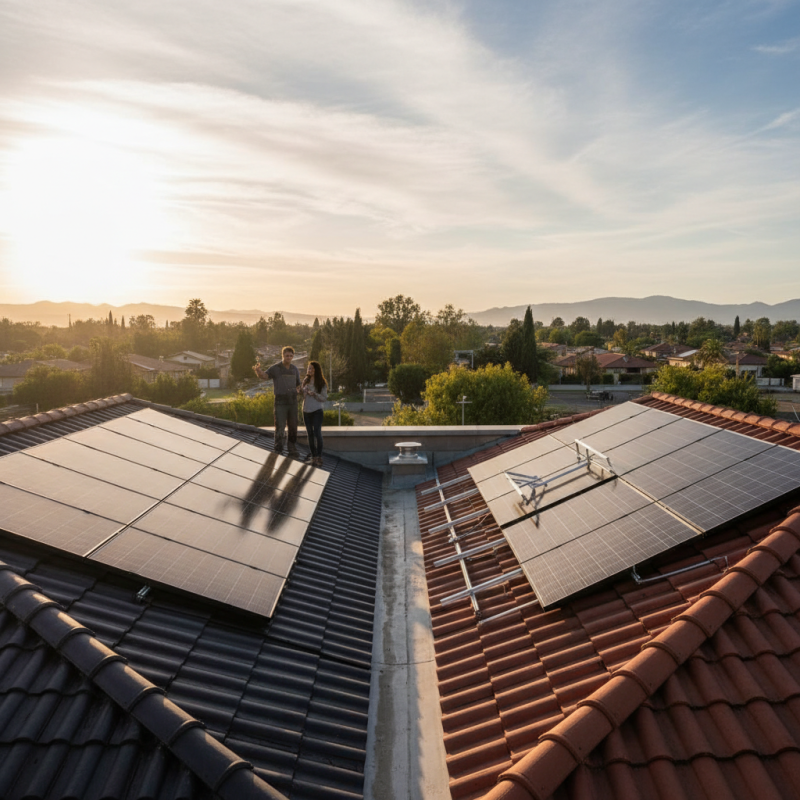
When selecting a solar mounting system, understanding the various types is essential. There are three primary categories: roof-mounted, ground-mounted, and pole-mounted systems. Roof-mounted systems are common, especially for residential areas. They minimize the need for land and utilize existing structures. They can withstand wind loads of up to 90 mph, according to the National Renewable Energy Laboratory (NREL).
Ground-mounted systems provide flexibility in placement and can be adjusted for optimal sun exposure. This option allows for easy installation and maintenance. However, they require more land area, which might not be available for some homeowners. Research shows that ground-mounted systems can increase solar energy capture by up to 30% compared to roof-mounted systems in specific locations.
Pole-mounted systems are ideal for properties with limited roof or ground space. These systems can be installed at various heights and angles. They allow for easy repair and adjustment. While they may be more costly upfront, their ability to follow the sun’s movement can lead to increased energy production. Each system has pros and cons that require careful evaluation based on your unique circumstances and space.
Choosing the right solar mounting system for your home involves understanding various essential factors. One key aspect to consider is the type of mounting system. There are fixed mounts, which are simple and cost-effective, and adjustable mounts that offer flexibility. Adjustable systems can maximize energy capture, especially in regions with variable sun angles.
Another factor is the roof material. According to the Solar Energy Industries Association, nearly 75% of residential solar installations are roof-mounted. Different materials such as shingles, metal, or tiles require specific mounting techniques. For instance, a metal roof may need specialized hardware to ensure durability.
Local climate plays a crucial role too. Areas prone to heavy winds or snow loads require more robust systems. Research from the National Renewable Energy Laboratory highlights that a well-installed system can withstand extreme conditions, which is vital for long-term reliability. Proper assessment can prevent future issues, such as leaks or structural damage. Engaging with local professionals can provide insights tailored to your specific situation, ensuring a reliable solar installation.
Assessing the compatibility of a solar mounting system with your home's roof structure is crucial. Each roof type has unique characteristics that influence installation and performance. For sloped roofs, a standard mounting system may suffice. However, flat roofs require specific solutions to ensure proper drainage and stability. A recent study from the Solar Energy Industries Association highlights that installation errors can reduce panel efficiency by up to 20%.
Understanding your roof's material is also vital. Asphalt shingles, metal, and tile roofs each necessitate different anchoring systems. A report from the National Renewable Energy Laboratory indicates that tile roofs can be 15% more challenging to penetrate. This can lead to installation delays and higher costs. Professionals often recommend consulting structural engineers, especially for older homes. They provide insights into weight distribution and support integrity, mitigating potential future issues.
Additionally, some homeowners overlook the orientation of their roof. South-facing roofs generally optimize solar exposure. Yet, many homes lack this ideal alignment. A mismatched angle can decrease energy production by up to 30%. Evaluating roof pitch and shading from nearby structures is essential in this process. Each aspect should be thoroughly reviewed to ensure you choose the right system that enhances your energy efficiency and investment.
When determining the optimal solar mounting system for your home, environmental factors play a crucial role. The geographical location impacts the roof's angle, shading, and local climate. For instance, homes in sunny areas benefit significantly from solar panels. According to the Solar Energy Industries Association (SEIA), states like California achieve up to 25 percent more energy output due to favorable weather conditions.
Moreover, the orientation of your roof greatly influences efficiency. South-facing roofs capture the most sun throughout the year. A report from the National Renewable Energy Laboratory (NREL) states that solar panels installed on south-facing surfaces generate approximately 20-30% more energy than those facing north. Additionally, nearby trees, buildings, or other structures can create shadows that reduce the energy production of solar systems.
Before installation, thorough assessments are necessary. Consider local regulations and zoning laws that may affect your solar project. Ensure your home can accommodate the additional weight of solar panels. A structural survey might reveal potential weaknesses in roof design, necessitating care before installation. These factors can result in unforeseen challenges and might require future adjustments for optimal performance.
When budgeting for a solar mounting system, it's essential to factor in both initial costs and long-term savings. The first step is to assess your installation space. The type of roof—flat or sloped—affects the mounting system's price. You might save on installation costs with a simple system, but are you compromising efficiency? It’s vital to consider how different systems perform under varying weather conditions.
Long-term savings can be significant. Solar panels paired with the right mounting system can provide energy independence, leading to reduced electricity bills. However, poorly chosen mounts may lead to roof damage and extra repairs later. Investing in a quality system is crucial. Neglecting this may cost more in the long run. Also, remember to check warranty details; it can reveal potential hidden costs.
Many homeowners find themselves overwhelmed by options. Researching requires time and patience. Not all systems suit every home. Consulting with a skilled installer can provide you with insights into what truly works. Balancing your budget with reliable advice will guide you toward a lasting investment in solar energy.
| Mounting System Type | Installation Cost (USD) | Durability (Years) | Weight Capacity (lbs) | Long-term Savings (10 Years) |
|---|---|---|---|---|
| Fixed Roof Mount | $1,500 | 25 | 450 | $10,000 |
| Adjustable Tilt Mount | $1,800 | 20 | 400 | $9,000 |
| Ground Mount | $2,500 | 30 | 600 | $12,000 |
| Ballasted Roof Mount | $2,000 | 25 | 500 | $10,500 |
: The main types are fixed mounts and adjustable mounts. Fixed mounts are simpler, while adjustable ones offer flexibility and better energy capture.
Different roof materials need specific mounting methods. For example, metal roofs may need special hardware for strong support and durability.
Weather conditions, like heavy winds or snow, determine the system's robustness. A well-installed system must endure extreme climate for long-term durability.
Each roof type has unique traits affecting installation. Errors in installation can cut efficiency by 20%, making compatibility assessments crucial.
South-facing roofs capture the most sunlight. If your roof isn’t ideally angled, energy production can drop by 30%, affecting overall efficiency.
Upfront costs vary based on the roof type and system. Investing in quality can lead to significant long-term savings on electricity.
Experts can offer tailored advice on your specific roof and situation. Their insights can prevent common installation errors and ensure durability.
Yes, warranties reveal potential hidden costs and provide peace of mind. A good warranty can save you from unexpected repair expenses later.
Researching different options takes time. Adjusting your budget based on reliable advice can lead to wise investments in solar energy solutions.
Some overlook roof pitches or angles. Ignoring these factors can lead to suboptimal performance and additional costs down the line.
When considering how to choose a solar mounting system for your home, it's essential to understand the various types available. These include roof-mounted, ground-mounted, and pole-mounted systems, each suited for different needs and preferences. Factors such as the compatibility with your home’s roof structure, environmental aspects, and installation locations play a crucial role in the decision-making process.
Additionally, budgeting for both the solar mounting system and the potential long-term savings is critical. By evaluating these elements, homeowners can make informed choices that maximize efficiency and affordability. Overall, taking the time to assess these factors will lead to a suitable solar mounting system that enhances energy production while fitting seamlessly with your home.

Soltrux Solar