When considering solar energy systems, the choice between fixed and adjustable mounts is crucial. What is the difference between fixed and adjustable solar mounts? Experts suggest that understanding these differences can greatly impact energy efficiency and installation cost.
John Solaris, a leading expert in renewable energy systems, once remarked, "Choosing the right mount can increase energy production significantly." His insights highlight the importance of optimizing solar panel positioning. Fixed mounts provide a stable installation and are typically easier to set up. However, they may not capture sunlight effectively year-round.
On the other hand, adjustable mounts offer versatility. They can be modified throughout the seasons, allowing solar panels to harness optimal sunlight. This adaptability can lead to higher energy yields but often requires more maintenance. As you explore these options, weighing your long-term goals against installation complexities is essential.
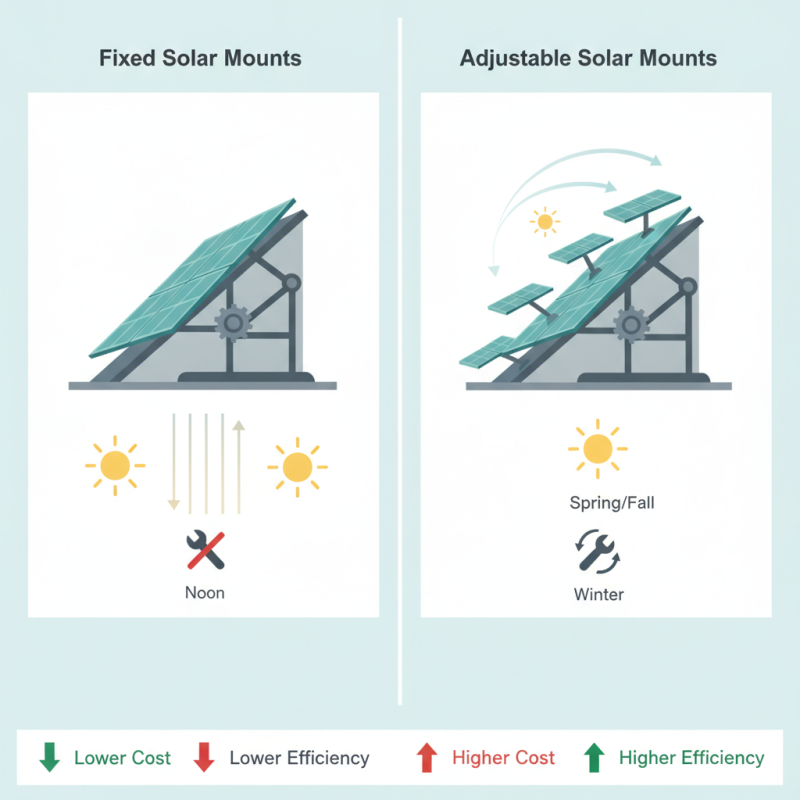
Fixed solar mounts are designed for stability and cost efficiency. This type of mount remains in a stationary position, allowing the panels to capture sunlight at optimal angles. According to a report by the National Renewable Energy Laboratory (NREL), fixed mounts can reduce installation costs by approximately 15% compared to their adjustable counterparts. This cost-effectiveness is crucial for homeowners and businesses seeking budget-friendly solar energy solutions.
Despite these advantages, fixed mounts can limit energy production. They do not adjust to the sun's changing position throughout the day, which can lead to potential energy loss. Industry studies show that fixed mounts may yield 10-20% less energy output compared to adjustable mounts, especially in locations with seasonal variations. Users should consider not only upfront costs but also the long-term energy production capabilities of fixed systems.
Additionally, stability is one of the hallmark traits of fixed solar mounts. Their solid construction ensures they withstand adverse weather conditions, including high winds and heavy snowfall. However, this stability can also mean longer installation times compared to adjustable mounts. Investing in fixed solar mounts entails a balance between reliable performance and the possibility of decreased energy efficiency.
Adjustable solar mounts provide significant advantages for anyone seeking to optimize energy capture. By allowing users to modify the angle of the solar panels, these mounts can adapt to the sun's position throughout the day. This flexibility enhances the overall efficiency of solar energy systems. The ability to adjust angles can lead to a 20% to 30% increase in energy production compared to fixed mounts.
However, this adaptability comes with some challenges. Adjustable mounts require regular maintenance. Users must ensure that mechanisms remain functional and free of debris. Failing to do so may hinder their efficiency. Moreover, installation can be more complex than fixed mounts, requiring additional expertise. Careful planning and professional installation can mitigate these obstacles.
Ultimately, the choice between fixed and adjustable mounts depends on individual energy needs and landscapes. Some users may prefer the simplicity of fixed mounts. Others might find that the potential for greater energy capture with adjustable systems is worth the effort. Regular evaluation and adjustments to the solar mount’s angle throughout the year are crucial for maximizing energy capture.
When comparing fixed and adjustable solar mounts, understanding long-term performance is crucial. According to industry data, fixed mounts typically have a lower initial cost. They also require less maintenance. However, this simplicity comes at a cost. Fixed mounts often miss optimal sun exposure. Studies indicate that adjustable mounts can increase energy capture by up to 25%. This figure underscores the potential gains through flexibility in panel angles.
Adjustable mounts allow for seasonal adjustments. This adaptability means better efficiency in varying sun angles throughout the year. Reports from solar research institutions highlight that sites utilizing adjustable mounts see yearly performance improvements. Yet, the increased complexity can lead to higher maintenance requirements. Misalignment happens, which can reduce overall performance if not regularly monitored.
Efficiency and durability often come down to installation quality and environment. A well-installed adjustable system can outperform fixed mounts significantly. But, potential users should consider the costs versus benefits. Even with their advantages, adjustable systems may not be suitable for every location due to climatic conditions or budget constraints. These trade-offs must be weighed during the selection process to ensure maximum return on investment.
When comparing fixed and adjustable solar mounts, installation complexity is a vital consideration. Fixed mounts are simpler to set up. They require fewer components and less labor. A straightforward installation process can be appealing for many homeowners. The clarity in mounting points and rigid structure makes them user-friendly, reducing potential errors.
On the other hand, adjustable mounts require more detailed setup. These mounts necessitate precise measurements to ensure optimal positioning. The ability to tilt or rotate adds layers of complexity. It’s crucial to account for local weather conditions and sun angles. Mistakes in setup can lead to inefficiencies in energy production. Without careful planning, users may face increased costs due to reinstallation.
Reflecting on these differences, it’s clear that the choice between fixed and adjustable mounts often hinges on user experience and preferences. Those who enjoy hands-on projects might find adjustable mounts fulfilling despite their challenges. Meanwhile, others may opt for fixed systems for their simplicity. Ultimately, understanding these installation factors helps in making an informed decision.
Weather variability plays a crucial role in the efficiency of solar mounts. Fixed solar mounts are designed at a specific angle, optimizing sun exposure under ideal conditions. However, during cloudy days, their performance may decrease significantly. These mounts do not adjust to shifting sunlight, resulting in lost energy capture.
On the other hand, adjustable solar mounts can change their angle based on the sun's position. This flexibility allows them to harness sunlight more effectively, especially during changing weather conditions. In rainy or overcast environments, these mounts may still capture more energy than fixed systems. Yet, the increased complexity can lead to maintenance challenges. Storms can cause potential mechanical failures, undermining their effectiveness.
Not every adjustable system performs well in extreme weather. High winds can affect their stability. Some users find the initial cost of adjustable mounts prohibitive. While they offer advantages, the balance of efficiency and reliability requires careful consideration.
: Fixed solar mounts offer stability and cost efficiency. They maintain a stationary position to optimize sunlight capture.
Fixed mounts can lower installation costs by around 15% compared to adjustable mounts, making them budget-friendly options.
Fixed mounts can limit energy production. They cannot adjust to the sun's position, leading to 10-20% less energy output.
Adjustable mounts allow users to change the panel angle, potentially increasing energy production by 20-30% compared to fixed mounts.
Adjustable mounts require regular maintenance and can be complex to install, demanding more time and expertise from users.
Fixed mounts are simpler to install, needing fewer components. Adjustable mounts require precise measurements and more effort.
Consider energy needs, landscape, installation ease, and willingness to maintain adjustments when selecting a mount type.
While stable, fixed mounts can extend installation times and may not maximize energy efficiency in all environments.
Regular evaluations and adjustments are essential for maximizing energy production with adjustable mounts, requiring ongoing attention.
Yes, mistakes in setup can significantly hinder efficiency, leading to potential increased costs for reinstallation.
In exploring the question, "What is the difference between fixed and adjustable solar mounts?", it's essential to consider several key aspects. Fixed solar mounts provide stability and cost efficiency, making them a popular choice for installations where minimal adjustments are needed over time. On the other hand, adjustable solar mounts offer the advantage of maximizing energy capture through angle adjustments, allowing users to optimize their solar panels' performance throughout the year based on the sun's position.
Additionally, the long-term performance of both mount types reveals that while fixed mounts are reliable, adjustable mounts can potentially lead to higher energy yields. However, this comes at the expense of increased installation complexity. Furthermore, weather variability can impact the efficiency of both systems, with adjustable mounts potentially offering better adaptability to changing conditions. Overall, the choice between fixed and adjustable solar mounts depends on specific energy needs and environmental considerations.

Soltrux Solar