Solar mounting decisions often begin with price, but the structure beneath panels deserves equal attention. In coastal fields, rooftops, and agricultural sites, mounts face moisture, heat, wind, and repeated maintenance. Composite systems, commonly reinforced with glass fibers, offer a practical alternative to conventional metal rails. Why choose composite materials for solar mounts? The answer involves more than corrosion resistance. Weight, installation effort, thermal behavior, electrical separation, and service life all influence project value. Small details matter. A lighter rail can reduce lifting strain and simplify work on a crowded roof.
This guide examines ten reasons developers, installers, and asset owners consider composite solar mounts. Drawing on installation experience and engineering evaluation, it connects material properties with decisions made in real projects. Composite components may resist rust, reduce thermal bridging, and support flexible layouts. Their lower weight can also reduce transport demands and make manual handling easier. However, performance depends on formulation, connection design, loading conditions, and manufacturer testing. Not every composite is suitable. A convincing brochure is not evidence.
Reliable selection requires documented mechanical data, weathering results, fire performance, and compatibility with the panel system. Local environmental exposure and structural requirements still need qualified review. This article keeps that caution visible while exploring durability, safety, cost, design freedom, and installation efficiency. Some benefits appear immediately, such as easier handling. Others emerge slowly through fewer replacements and simpler inspections. The trade-offs deserve honest attention. Composite mounts are promising, not magical, and careful evaluation remains essential for dependable solar projects.
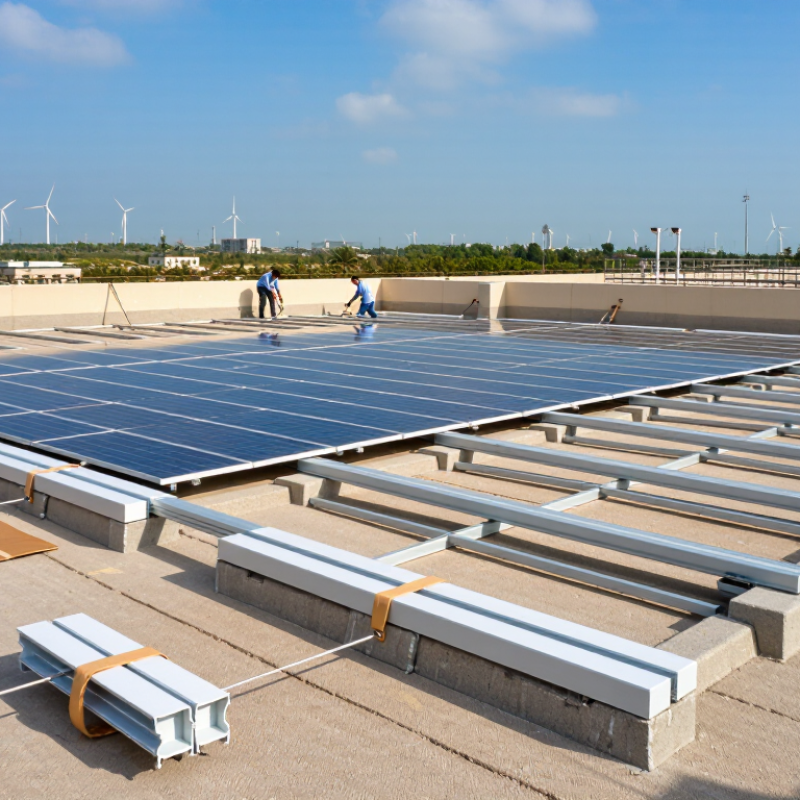
Composite solar mounts are structural supports made from fiber-reinforced polymers, often glass fibers embedded in resin. They carry modules, transfer wind and snow loads, and connect the array to foundations or roofs. During installation, rails and brackets form a measured grid. Clamps then secure each panel without touching its active surface.
The material does not rust like untreated steel. It also resists moisture, salt, and many chemicals. That matters near coastlines, farms, and industrial sites.
The International Energy Agency reported that global solar PV capacity exceeded 1.6 terawatts by the end of 2023. More installations mean more mounting systems must perform for decades. NREL’s 2022 photovoltaic degradation study found a median module degradation rate near 0.5% per year.
A mount cannot prevent module aging, but stable alignment can reduce avoidable mechanical stress. Composite systems are also lightweight, which can simplify transport and rooftop handling. Fewer heavy tools may mean faster work.
Still, composite does not mean maintenance-free. UV exposure, temperature cycling, fastener torque, and poor drainage require inspection.
Grounding needs special design because many composite parts are electrically nonconductive. The trade-off is real. A 2023 IEA PVPS report highlights the importance of long-term system quality as solar deployment expands.
In practice, I would check local wind loads, snow loads, fire requirements, and supplier test data before selecting a system. Cost comparisons can also be misleading. Lower installation weight may offset a higher material price, but not always.
Composite materials can improve solar mounting performance through lower weight, corrosion resistance, and electrical insulation.
These benefits matter on rooftops, coastal sites, and uneven ground. Field installers often report easier handling when rails and brackets arrive lighter. Fewer heavy components can reduce lifting time and rooftop loading. That practical advantage is easy to overlook.
The IRENA Renewable Capacity Statistics 2024 report recorded about 1,419 GW of global solar capacity by the end of 2023.
NREL research has reported a median photovoltaic degradation rate near 0.5% annually.
Mounting systems must therefore perform reliably for decades. Mount stability helps protect alignment and reduce avoidable performance losses. Composite parts also resist salt spray better than many unprotected metals. They offer lower thermal expansion in some designs. That can reduce stress around fasteners and modules. Not every composite performs equally.
Material selection still requires caution.
Engineers should review ultraviolet exposure, fire behavior, creep resistance, impact strength, and temperature cycling. The wrong resin can weaken after years of sunlight. That is the uncomfortable part.
A lighter mount is not automatically a stronger mount.
Independent testing and installation records provide better evidence than marketing claims. Designers should also verify load calculations for wind, snow, seismic movement, and long-term deflection. Small installation errors can cancel major material advantages.
Composite mounting works best when its laboratory data matches the actual site.
Composite solar mounts earn attention where outdoor exposure is relentless. Ten practical advantages stand out. They include corrosion resistance, low weight, UV stability, and moisture tolerance. Other benefits include freeze-thaw durability, electrical isolation in suitable formulations, fatigue resistance, low maintenance, easier handling, and long service potential. Unlike ordinary metal, well-designed composite sections do not rust when salt spray reaches cut edges or fasteners. They also resist water absorption when their resin system and seals are properly specified.
Field experience shows that installation details control performance. A lighter rail can reduce lifting effort and roof loading. Nonconductive formulations may limit unwanted electrical paths near sensitive equipment. UV-resistant materials help preserve strength under years of intense sunlight. In cold regions, composites can reduce cracking risks during repeated freeze-thaw cycles. Their chemical resistance may also help near farms, roads, and industrial sites. Engineers still need to check wind uplift, span, creep, temperature range, and fastener compatibility. Testing should reflect the actual climate, not a convenient laboratory average.
Composites are not maintenance-free. Poor drilling, trapped water, or incorrect torque can weaken a sound design. Small shortcuts matter. Routine checks remain sensible, especially after severe storms. I would also question any performance claim without verified load data and weathering tests. When material selection, calculations, and workmanship align, composite mounts can provide stable support with fewer corrosion concerns and less handling strain over their service life.
| No. | Reason | Harsh Outdoor Challenge | Composite Advantage | Relevant Data or Design Fact | Important Qualification |
|---|---|---|---|---|---|
| 1 | Corrosion Resistance | Salt spray, coastal air, rain, and industrial pollutants can accelerate metal corrosion. | Fiber-reinforced polymer does not rust and can provide a non-metallic alternative in corrosive environments. | Glass-fiber composite is commonly selected for marine, wastewater, and coastal applications because the polymer matrix separates fibers from the environment. | Resin type, fiber architecture, edge sealing, fasteners, and manufacturing quality determine actual service life. |
| 2 | Reduced Galvanic-Corrosion Risk | Dissimilar metals may form an electrochemical couple when moisture and salts are present. | Composite components are electrically non-conductive and do not create a metal-to-metal galvanic couple by themselves. | Typical fiberglass-polymer composites have very high electrical resistivity compared with metals. | Metal bolts, rails, washers, and module frames still require compatible materials and suitable isolation practices. |
| 3 | Lower Weight | Remote rooftops, uneven terrain, and large installation areas can make transport and manual handling difficult. | Composite sections can reduce handling effort and may simplify delivery to locations with restricted access. | Typical densities: glass-fiber composite about 1.5–2.0 g/cm³, aluminum about 2.7 g/cm³, and carbon steel about 7.85 g/cm³. | Final system weight depends on section geometry, reinforcement, connection design, ballast, and wind-load requirements. |
| 4 | UV-Weathering Options | Continuous sunlight can cause color change, chalking, and surface degradation in unprotected polymers. | UV-stabilized resins, protective surface layers, and suitable pigments can improve outdoor weathering performance. | Accelerated-exposure testing is commonly evaluated using procedures such as ASTM G154 or equivalent project specifications. | Accelerated laboratory exposure is not an exact one-to-one prediction of service life in every climate. |
| 5 | Moisture and Freeze–Thaw Durability | Rain, humidity, standing water, and repeated freezing can damage porous or poorly protected materials. | A properly manufactured polymer matrix can limit water penetration and avoid rust-related expansion. | Closed-section designs and sealed cut edges reduce pathways for moisture ingress. | Water absorption varies by resin and reinforcement; drainage and edge protection should be included in the design. |
| 6 | Low Thermal Conductivity | Highly conductive supports can transfer heat rapidly and may create localized thermal paths. | Composites generally conduct heat less readily than metals, which can help reduce direct thermal bridging. | Typical thermal conductivity is about 0.2–0.5 W/m·K for many glass-fiber composites, compared with roughly 205 W/m·K for aluminum. | Thermal behavior must still account for expansion, fastener movement, module temperature, and fire requirements. |
| 7 | Electrical Insulation | Conductive mounting parts can require additional electrical isolation and bonding considerations. | Non-conductive composite parts can help separate electrical paths and reduce unintended conductive contact. | Insulating materials are useful where electrical separation is part of the system design. | The complete photovoltaic mounting system still requires grounding, bonding, and electrical safety verification where applicable. |
| 8 | Fatigue and Vibration Capability | Wind-induced vibration, thermal cycling, and repeated load changes can accumulate damage over time. | Fiber orientation and laminate design can be tailored for repeated directional loads. | Composite fatigue performance depends strongly on fiber direction, laminate construction, stress level, and environmental exposure. | Use engineering calculations and project-specific testing rather than assuming that every composite has the same fatigue life. |
| 9 | Chemical Resistance | Fertilizers, cleaning agents, wastewater gases, and industrial chemicals may attack exposed materials. | The resin system can be selected for resistance to specific chemicals and operating conditions. | Vinyl ester, epoxy, and polyester systems have different chemical-resistance profiles. | Always confirm concentration, temperature, exposure time, and compatibility with the material supplier or engineer. |
| 10 | Lower Maintenance Potential | Rust treatment, recoating, and replacement of corroded parts can increase lifecycle labor in exposed locations. | Corrosion-resistant surfaces and stable non-metallic sections may reduce routine inspection and coating needs. | Maintenance requirements are influenced by inspection access, fastener materials, drainage, UV protection, and local climate. | Composite systems are not maintenance-free; inspect for cracking, delamination, impact damage, loose connections, and UV degradation. |
| Design note: Composite performance varies by resin, reinforcement, geometry, connection method, and climate. Final selection should be verified against applicable structural, fire, electrical, wind, snow, and environmental requirements. | |||||
Top 10 Reasons to Choose Composite Solar Mounts
How Lightweight Design Simplifies Installation and Maintenance
Composite solar mounts reduce the physical effort required on rooftops and ground arrays. A lighter rail is easier to carry, align, and secure with fewer workers. Installation teams can move components across narrow roof paths without heavy lifting equipment. This matters as solar deployment accelerates. IRENA reported 346 gigawatts of new solar capacity worldwide in 2023. Every saved handling step can improve project efficiency.
Less weight can also reduce structural demands. That may simplify engineering checks for older roofs, although it never replaces a qualified load assessment. NREL’s 2023 cost benchmark placed utility-scale photovoltaic systems near US$1.14 per watt-DC in 2022. Labor and balance-of-system choices still affect that figure. Small installation gains can become significant across large sites.
Maintenance is simpler when installers can handle parts safely. Composite components resist corrosion, which helps in coastal and humid environments. They also reduce the need for frequent surface treatment. Still, lightweight does not mean maintenance-free. Technicians should inspect fasteners, drainage paths, ultraviolet exposure, and thermal movement. I would not specify a composite mount without checking wind loads, fire performance, and local certification. That caution is easy to overlook. In real projects, the best design balances low weight with stiffness, durability, and accessible replacement procedures.
How lightweight design simplifies installation and maintenance
The index is a normalized engineering comparison based on common characteristics of glass-fiber-reinforced polymer composites, including low density, corrosion resistance, electrical insulation, dimensional stability, and reduced maintenance needs. Actual performance varies by resin, fiber content, profile design, climate, and installation conditions.
Composite solar mounts deserve evaluation through three practical questions: cost, sustainability, and site suitability. IRENA’s Renewable Power Generation Costs in 2023 reports that utility-scale solar PV reached an average LCOE of USD 0.044 per kWh. This makes mounting efficiency more important. Composite systems can reduce handling weight, transport effort, and installation time. However, the lowest purchase price may not deliver the lowest lifetime cost. Check labor, replacement access, fasteners, and disposal requirements.
Cost perspective The lowest purchase price may not deliver the lowest lifetime cost.
Sustainability needs evidence, not attractive claims. An environmental product declaration, recycled-content statement, and lifecycle assessment can reveal impacts beyond manufacturing. The IEA PVPS Trends 2024 report recorded more than 1.6 terawatts of global PV capacity by the end of 2023. At this scale, material durability matters. Composites resist corrosion in many wet or coastal environments, yet ultraviolet exposure, thermal cycling, fire performance, and end-of-life recovery still require verification. Some projects may need a cautious answer.
Application suitability is equally decisive. A rooftop with limited structural capacity may benefit from lightweight rails. A desert site may demand strong abrasion and heat testing. Agricultural or floating installations require different load assumptions, drainage details, and maintenance clearances. Do not copy a design from another climate.
Project considerations A rooftop with limited structural capacity may benefit from lightweight rails. A desert site may demand strong abrasion and heat testing. Agricultural or floating installations require different load assumptions, drainage details, and maintenance clearances.
Tips: Request tested values for tensile strength, creep, wind uplift, temperature range, and fire behavior. Compare ten-year ownership costs, not only product prices. Ask for project references with similar wind, humidity, and maintenance conditions. Then review the calculations with an independent structural engineer.
They are lightweight, corrosion-resistant, electrically insulating, and often easier to handle. They can reduce lifting effort and rooftop loading. Not always.
Yes, suitable designs resist salt spray and moisture better than many unprotected metals. Engineers must check cut edges, seals, fasteners, and drainage paths.
Lighter rails are easier to carry across narrow roof paths. Fewer workers may be needed for positioning and securing components. Small gains matter.
No. Engineers must still assess wind uplift, snow, seismic movement, span, and long-term deflection. A lighter system is not automatically stronger.
They can reduce corrosion-related treatment and replacement work. However, technicians should inspect fasteners, drainage, ultraviolet exposure, and thermal movement regularly.
UV-stable formulations can preserve strength during years of exposure. The wrong resin may weaken over time. This risk deserves honest attention.
Some designs tolerate repeated freeze-thaw cycles and resist cracking. Performance depends on temperature range, moisture control, and verified testing.
Poor drilling, trapped water, incorrect torque, and incompatible fasteners can damage a sound design. Small shortcuts can cancel major material advantages.
Request independent load data, weathering results, fire information, and installation records. Test conditions should resemble the actual project climate.
No. Routine inspections remain sensible, especially after severe storms. The material helps, but workmanship still decides much of the outcome.
Composite solar mounts use engineered composite materials to support and secure solar panels on rooftops, ground systems, and other structures. Their strength comes from a carefully designed combination of fibers and resin, creating stable components that resist corrosion, moisture, ultraviolet exposure, and temperature changes. Why choose composite materials for solar mounts? They can deliver a useful balance of durability, low weight, design flexibility, and long-term reliability without relying on heavy metal parts.
Because composite mounts are lightweight, they can simplify transportation, handling, and installation while reducing structural loads and making maintenance easier. Their resistance to harsh outdoor conditions may also help preserve performance over time, particularly in coastal, humid, or chemically exposed environments. When selecting a composite mounting solution, users should compare total cost, expected service life, environmental benefits, load requirements, installation conditions, and compatibility with the solar system. The best choice depends on the project’s technical demands, budget, sustainability goals, and long-term operating conditions.

Soltrux Solar