In the quest for optimal solar energy production, many experts highlight the significance of proper installation techniques. One key aspect is the use of adjustable brackets. Dr. Emily Johnson, a solar energy specialist at GreenTech Innovations, states, "The efficiency of solar panels heavily relies on their alignment with the sun." This brings us to the critical question: Why do solar panels need adjustable brackets?
Proper positioning can dramatically enhance energy capture. With the sun's trajectory changing throughout the year, rigid installations often fall short. Adjustable brackets allow panels to pivot and tilt, adapting to seasonal shifts in sunlight. This means more energy on cloudy days and improved performance during winter months.
Yet, many installations overlook this feature. Some users believe fixed angles suffice, leading to missed opportunities for efficiency gains. Exploring the full potential of solar technology requires understanding these nuances. Adjustable brackets may seem like a small detail, but they can make a substantial difference in harnessing solar power effectively.
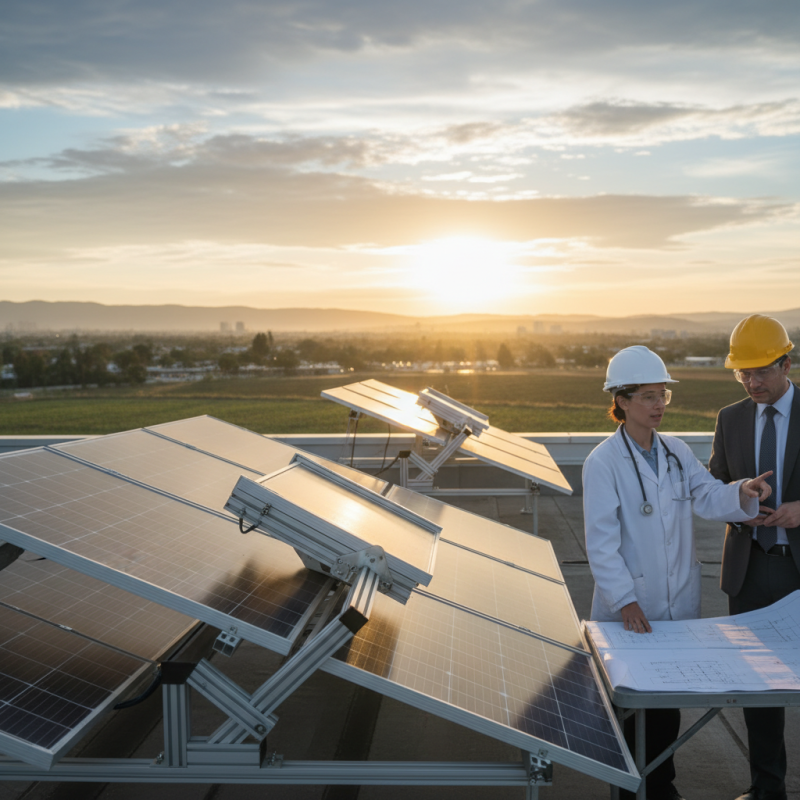
The orientation of solar panels is crucial for maximizing their efficiency. A report by the National Renewable Energy Laboratory shows that proper alignment can increase energy capture by up to 25%. This statistic highlights why adjustable brackets are essential. They allow panels to follow the sun's path throughout the day, ensuring optimal light exposure.
Research from the Solar Energy Industries Association suggests that solar panels facing south, tilting at an angle of 30 degrees, achieve the best performance in the northern hemisphere. However, terrain and shading can complicate this ideal setup. Many installations fail to account for these variables, leading to significant energy loss. The effectiveness of solar panels often depends on location and weather conditions, creating a need for localized adjustments.
Furthermore, seasonal changes affect sun angles. In winter, lower sun trajectories make fixed panels less efficient. Users must reevaluate their installations periodically. Regular assessments can reveal whether the current orientation continues to deliver the expected output. Maintaining efficiency in solar energy requires constant attention and occasional modifications.
Adjustable brackets play a crucial role in solar panel installations. They allow for optimal tilting and orientation, maximizing sunlight exposure. According to a report from the National Renewable Energy Laboratory (NREL), proper panel alignment can improve efficiency by as much as 20%. This is significant as solar technology continues to evolve.
Many installations overlook the importance of adjustable brackets. Fixed angles may not capture the sun's full potential throughout the year. Adjustable systems can be tailored to seasonal changes, enhancing energy production. A study by the Solar Energy Industries Association (SEIA) indicates that adjustable mounting can lead to an increase in energy harvest over fixed systems.
Tips: Consider your location's sun path when installing panels. Research local weather patterns and seasons. This knowledge will aid in selecting the right bracket system. Regular maintenance is essential, too. Inspect brackets for alignment issues throughout the year to avoid energy loss. Efficiency isn’t just about the panels; the mounting system matters.
Solar panels require adjustable brackets to optimize performance throughout changing seasons. Their efficiency fluctuates based on various factors, which makes proper alignment critical. For instance, sunlight intensity varies from summer to winter. According to a report by the National Renewable Energy Laboratory (NREL), optimal angles can boost energy capture by up to 20%. A fixed positioning system may not harness this efficiency gain.
The sun’s path differs each month. In summer, higher angles optimize collection, while lower angles are better in winter. Installing adjustable brackets allows for these necessary angle adjustments. As solar energy is vital to sustainability, adapting to these seasonal changes ensures that harnessed energy is maximized. Additionally, shadowing from nearby trees can drastically reduce efficiency. Maintaining an optimal tilt helps maintain performance even on cloudy days.
Tip: Regularly check your solar panel system to ensure brackets are functioning correctly. This helps prevent underperformance. Make adjustments seasonally to align with the optimal tilt for maximum solar exposure. Embrace this practice, as investing time here pays off in energy savings. However, be cautious of complex installations; improper setup can lead to inefficiencies, necessitating reevaluation of your approach.
Adjustable brackets for solar panels enable optimal positioning throughout the year. As sunlight changes with the seasons, these brackets allow panels to tilt at different angles. This adjustment can significantly enhance energy production. Solar energy output varies depending on the sun's path. In winter, the sun sits lower, allowing tilted panels to capture more light.
Moreover, the ability to adjust creates opportunities for increased efficiency. Many users find the fixed angle insufficient during certain times of the year. This can frustrate those eager to maximize energy usage. In contrast, utilizing seasonal adjustments helps harness sunlight effectively, boosting overall energy output. However, not everyone may be willing to invest in adjustable systems, even with evident benefits.
Installation of adjustable brackets requires careful consideration. Incorrect installation may lead to structural issues. Additionally, ongoing maintenance is essential to ensure performance enhancement. Seasonal adjustments are only effective when executed correctly. DIY solutions may not always yield positive outcomes, and professional help could be necessary. Understanding these dynamics can lead to better decision-making and energy efficiency in solar panel setups.
| Season | Optimal Angle (Degrees) | Expected Energy Production (kWh) | Efficiency Gain (%) |
|---|---|---|---|
| Winter | 45 | 300 | 15 |
| Spring | 30 | 450 | 10 |
| Summer | 15 | 600 | 5 |
| Fall | 30 | 400 | 8 |
Adjustable mounting solutions for solar panels are gaining importance as we look towards 2026. These brackets allow panels to be tilted or rotated, optimizing their angle to the sun. With changing solar technology, customization is key. Different climates and solar conditions require varied adjustments. Accuracy in positioning can significantly enhance energy capture.
Future trends show a clear move toward automation in solar panel positioning. Smart technology can analyze sunlight patterns. This information helps in making real-time adjustments. However, implementing such systems can be costly. Not all homeowners may afford high-tech solutions.
There are challenges with adjustable brackets too. While they offer flexibility, they require regular maintenance. Components may wear down or become misaligned over time. Finding a balance between efficiency and upkeep is critical. These evolving solutions could redefine solar energy use and improve overall effectiveness.
: They allow for optimal tilting and orientation of solar panels. This maximizes sunlight exposure.
Proper alignment can enhance efficiency by up to 20%, according to NREL.
They can adapt to seasonal changes, capturing more sunlight throughout the year.
Fixed angles may miss capturing the sun’s full potential during the year.
Assess your location's sun path and research local weather patterns before installation.
Yes, inspecting brackets for alignment issues is essential to avoid energy loss.
Incorrect installation may cause structural issues, affecting overall performance.
The cost may deter them, even when the benefits of increased efficiency are clear.
Seasonal adjustments require careful execution; DIY methods may not always work well.
Efficiency involves both panels and the mounting system; both need attention for best results.
The efficient performance of solar panels is highly dependent on their orientation relative to the sun. This raises the question, "Why do solar panels need adjustable brackets?" Adjustable brackets play a crucial role in optimizing the angle of solar panels, allowing for better alignment with the sun throughout different times of the year. Factors such as seasonal changes in sun position and the varying intensity of sunlight can significantly impact energy production.
By implementing adjustable mounting solutions, solar installations can maximize energy capture during peak production periods. As solar technology evolves, these adjustable brackets are becoming increasingly sophisticated, enabling users to adapt to changing environmental conditions and enhance overall efficiency. As a result, understanding the importance of these systems is vital for maximizing the return on investment in solar energy.

Soltrux Solar