High-durability components custom-manufactured to match international structural load standards and reduce onsite installation timelines.
Years Industry Experience
Exporting Countries
Max Snow Load Capacity
Wind Speed Resistance
Unpacking the challenges faced by EPC developers, structural engineers, and global distributors in solar support infrastructure.
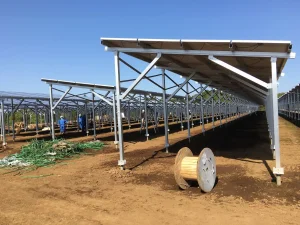
As utility-scale and commercial & industrial (C&I) solar deployments surge globally, the mechanical infrastructure anchoring these multi-million-dollar PV systems faces unprecedented environmental challenges. Rising frequencies of extreme weather events—from category-5 hurricanes in coastal Americas to heavy snow loads in Northern Europe and dust storms in the Middle East—have pushed mounting structures to the forefront of engineering concern. A solar array is only as reliable as its foundation, making custom OEM solar panel support brackets critical parameters for asset security, cost-per-watt efficiency, and 25-to-30-year operational life cycles.
Procurement teams are shifting away from generic "one-size-fits-all" hardware in favor of highly localized, custom-engineered bracket profiles. This shift is driven by strict building codes such as ASCE 7-16 (US), Eurocode 1 & 3 (Europe), and AS/NZS 1170 (Australia). For global EPCs (Engineering, Procurement, and Construction), importing structural hardware demands navigating supply chain complexities, localized duty regulations, and technical compliance validations. An optimized OEM partner must offer not just fabrication capacity, but full-spectrum technical capabilities—from initial finite element analysis (FEA) to certified structural load ratings.
Structural failure from inadequate wind or seismic modeling causes major losses. Custom OEM brackets are designed with sites-specific structural calculation reports verifying load distributions under worst-case parameters.
Selecting the ideal material profile (e.g., Al6005-T5 versus Q355B Steel with Hot-Dip Galvanization) dynamically balancing structural integrity, geographical corrosion categories (C3-C5), and budget goals.
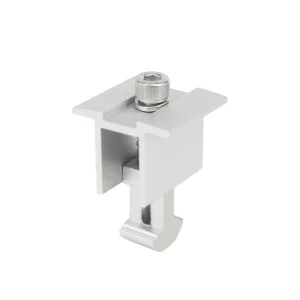
With domestic field labor representing up to 40% of standard balance-of-system (BOS) costs, pre-assembled clamp mechanisms and snap-fit, self-aligning rail brackets yield massive installation savings.
Dongguan Soltrux Solar Co., Ltd. is a leading China-based manufacturer specializing in smart solar mounting solutions for residential and commercial projects. Established in Dongguan, the company has built a strong reputation for delivering high-quality, durable, and adjustable solar brackets designed to maximize solar energy efficiency across diverse installations. Soltrux Solar combines advanced engineering with premium materials, including aluminum alloys and corrosion-resistant stainless steel, ensuring long-lasting performance even in harsh weather conditions.
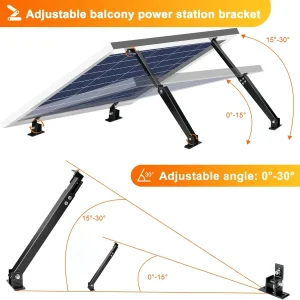
The company offers a comprehensive range of mounting systems, including roof mounts, ground mounts, pole mounts, and custom adjustable solutions. With a focus on precision, reliability, and ease of installation, Dongguan Soltrux Solar serves both small-scale residential installations and large commercial solar projects. Their expert R&D and engineering teams continuously innovate, providing solutions compatible with fixed and tracking solar systems to enhance energy yield.
Committed to customer satisfaction and global standards, Dongguan Soltrux Solar exports its products worldwide, offering OEM and customized services tailored to specific project requirements. The company’s mission is to empower renewable energy adoption by providing efficient, sustainable, and cost-effective solar mounting solutions. With years of industry experience and a dedication to quality, Dongguan Soltrux Solar Co., Ltd. stands out as a trusted partner for solar installers, developers, and energy-conscious clients seeking reliable solar infrastructure.
Engineering bracket materials to survive C3 to C5 industrial and maritime atmospheric corrosion ratings for over three decades.
A structure is only as reliable as its chemical composition. When deploying solar brackets, manufacturers must align material profiles with localized environmental challenges. For instance, installations near coastal borders demand marine-grade materials to prevent premature galvanic corrosion. At Soltrux Solar, our materials undergo meticulous selection and quality inspections:
| Material Type | Grades Used | Surface Treatment / Coating | Corrosion Resistance Class | Primary Application Field |
|---|---|---|---|---|
| Aluminum Alloy | AL6005-T5 / AL6063-T6 | Anodic Oxidation (Film thickness ≥15 μm) | C3 - C4 (Industrial & Coastal Urban) | Roofing structures, clamps, rail networks, light ground arrays |
| Carbon Steel | Q235B / Q355B (Structural) | Hot-Dip Galvanized (HDG, Coating ≥85 μm) | C4 - C5 (Heavy Industrial & Coastal Marine) | Utility-scale ground arrays, pile-driven posts, heavy carports |
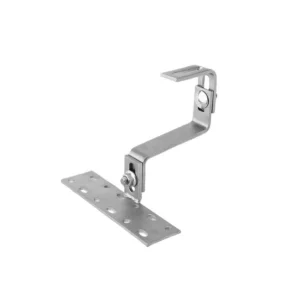
| Stainless Steel | SUS304 / SUS316 | Passivated / Electro-polished | C5-M (Marine & High Salinity Offshore) | Fasteners, hooks, tile roof anchors, adjustable tilt linkages |
To support structural lifespan projections, our HDG (Hot-Dip Galvanized) and anodized aluminum profiles are validated using salt-spray testing chambers conforming to ASTM B117 standards, maintaining mechanical capability even after 1,000+ hours of continuous salt-fog exposure. Additionally, finite element analysis (FEA) is conducted on all custom geometries to identify stress-concentration zones, optimizing structural wall thicknesses and minimizing raw material waste without compromising safety margins.
From site parameters to final batch shipping, how Soltrux Solar ensures structural compliance at every stage.
EPC client provides targeted wind speed (m/s), snow load (kN/m²), terrain class, tilt angles, and panel dimensions.
Our engineers build 3D models and run finite element analysis (FEA) to confirm safety indices and optimize profile weights.
Precision tooling and CNC milling produce functional samples to verify fitment, slip-resistance, and pull-out thresholds.
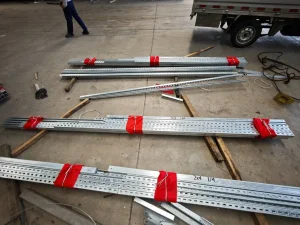
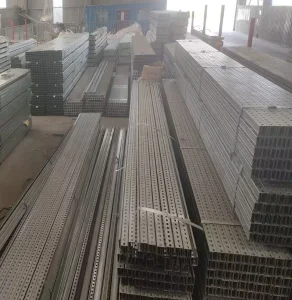
Automated punching, stamping, extrusion, and galvanizing lines run under ISO 9001 quality controls before global shipping.
Soltrux mounts are engineered, audited, and certified to meet regional building and structural codes.
International solar installations require compliance with regional safety codes before grid connection and insurance validation. Soltrux Solar’s OEM processes integrate certified engineering rules to facilitate quick approvals globally:
Technical answers for procurement officers, structural designers, and logistics coordinators.
We require the panel dimensional blueprint, layout orientation (portrait or landscape), design wind speed, max snow weight, roof or foundation profile (ground, metal deck, shingle, concrete), and target tilt angles. This ensures our engineering calculations meet structural requirements.
We use high-grade EPDM rubber isolating spacers and premium SUS304 stainless steel fasteners. This physical barrier blocks electrochemical contact between raw aluminum and galvanized steel, preventing galvanic corrosion in damp environments.
Our standard hot-dip galvanized components maintain an average zinc coating thickness of 85 microns or more, conforming to ASTM A123 / ISO 1461. This delivers reliable performance in harsh, high-corrosion agricultural and coastal environments.
Yes. We pre-assemble key sub-assemblies (such as adjustable legs, clamp modules, and base connectors) at our factory. This minimizes loose hardware counts and saves up to 30-40% on field labor hours during installation.
Yes, we provide standard FEA data, static structural load calculations, and wind tunnel simulation metrics. If needed, we can coordinate with third-party engineering networks to offer stamped calculations that satisfy regional building authorities.
Standard lead times average 10 to 15 days for component structural engineering and tooling setup, and 15 to 25 days for mass extrusion and coating processing, depending on final order volume and material configurations.
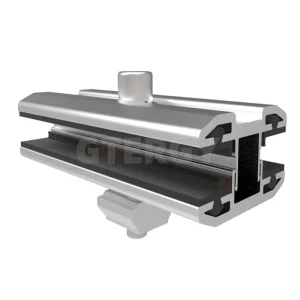
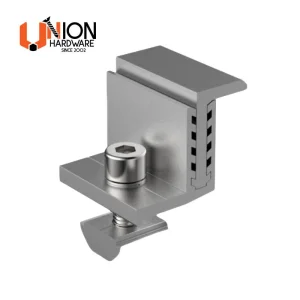
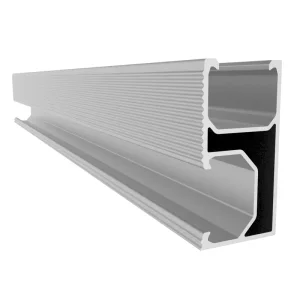
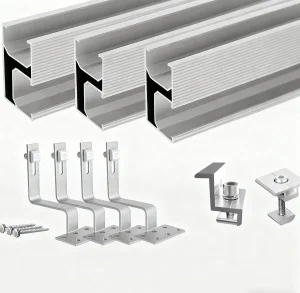
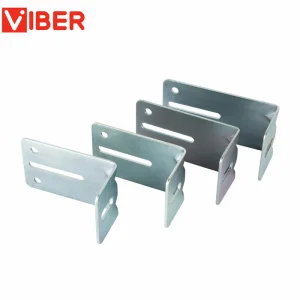
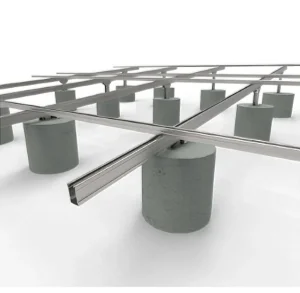
Explore our range of solar components, including heavy-duty rails, mounting brackets, clamps, and fasteners.
 Soltrux Solar