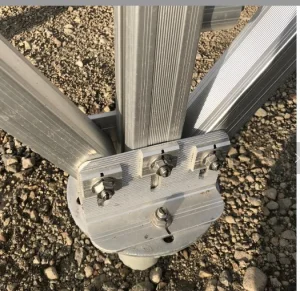
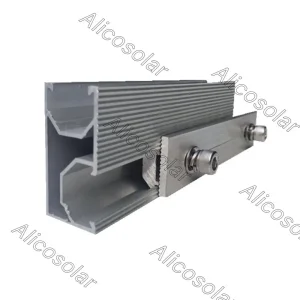
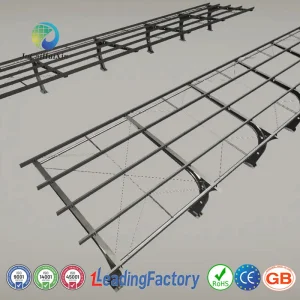
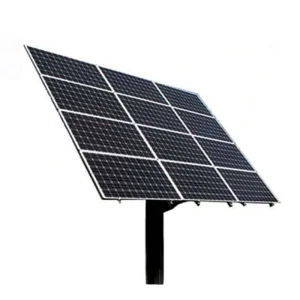
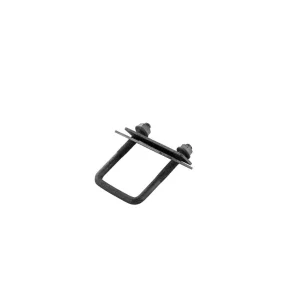
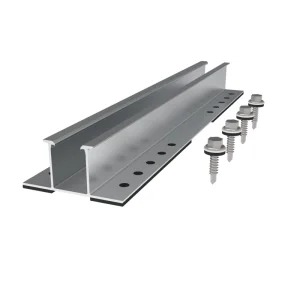
Explore our highly-regarded, engineered rail structures and racking components designed to anchor heavy load solar projects.
In the global race toward carbon neutrality, the structural integrity of photovoltaic (PV) mounting systems has transitioned from a utility afterthought to a critical factor in financial asset security. Solar rails, the backbone of any solar mounting grid, dictate the system's operational lifetime, wind load tolerance, and corrosion resistance profile. For international EPC contractors, developers, and distributors, selecting the appropriate Chinese manufacturing partner involves a rigorous evaluation of engineering capacity, raw material procurement, and manufacturing tolerances.
China is home to over 80% of the world's solar mounting rail manufacturing capacity, concentrated heavily in industrial hubs like Guangdong, Jiangsu, and Fujian. Understanding how these facilities utilize aluminum extrusion, hot-dip galvanization, and customized engineering is essential to lowering the Levelized Cost of Energy (LCOE) while safeguarding your system against structural failure.
A rapid reference guide for structural engineers analyzing standard rail tolerances.
Incorporating established manufacturing leadership and verified project history across the global PV spectrum.
Dongguan Soltrux Solar Co., Ltd. is a leading China-based manufacturer specializing in smart solar mounting solutions for residential and commercial projects. Established in Dongguan, the company has built a strong reputation for delivering high-quality, durable, and adjustable solar brackets designed to maximize solar energy efficiency across diverse installations. Soltrux Solar combines advanced engineering with premium materials, including aluminum alloys and corrosion-resistant stainless steel, ensuring long-lasting performance even in harsh weather conditions.
The company offers a comprehensive range of mounting systems, including roof mounts, ground mounts, pole mounts, and custom adjustable solutions. With a focus on precision, reliability, and ease of installation, Dongguan Soltrux Solar serves both small-scale residential installations and large commercial solar projects. Their expert R&D and engineering teams continuously innovate, providing solutions compatible with fixed and tracking solar systems to enhance energy yield.
Committed to customer satisfaction and global standards, Dongguan Soltrux Solar exports its products worldwide, offering OEM and customized services tailored to specific project requirements. The company’s mission is to empower renewable energy adoption by providing efficient, sustainable, and cost-effective solar mounting solutions. With years of industry experience and a dedication to quality, Dongguan Soltrux Solar Co., Ltd. stands out as a trusted partner for solar installers, developers, and energy-conscious clients seeking reliable solar infrastructure.
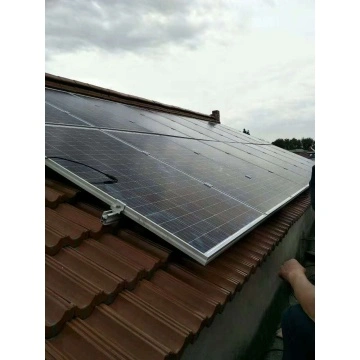
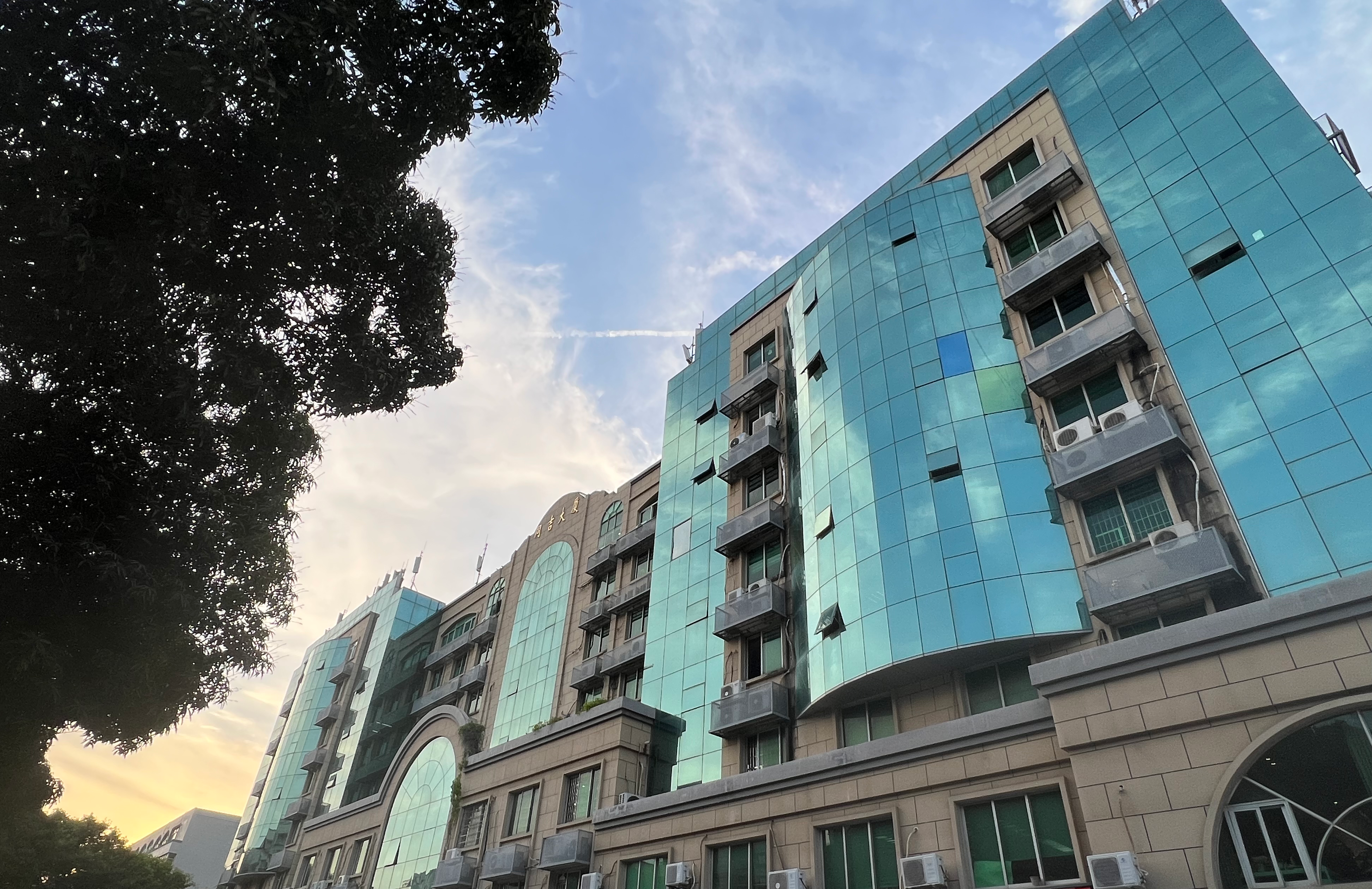
Years of Engineering Experience
Global Shipments Delivered
Countries Supplied Worldwide
ISO9001 & CE Certified Quality
Understanding the metallurgical, logistical, and economic drivers behind China's solar dominance.
By positioning manufacturing centers close to raw aluminum smelting and steel rolling facilities, factories reduce inner-province transportation overhead and optimize raw material costs.
Modern Chinese extrusion lines operate automated systems that deliver high accuracy profiles with strict cross-sectional dimensional tolerance matching, key for rapid click-assembly.
From custom anodization processes (>15 microns for seaside regions) to thick magnesium-aluminum-zinc coatings, Chinese facilities offer robust protection for components subjected to harsh environmental conditions.
The solar racking industry is experiencing structural evolution, driven by the shift toward larger wafer formats (such as 210mm M12 cells) and dual-glass bifacial modules. Racking and rail systems must bear increased static wind loads and snow loads while avoiding any rear shading that could lower bifacial power generation.
1. Material Optimization (Zn-Al-Mg Alloys): In utility-scale installations, Zinc-Aluminum-Magnesium coated steel is increasingly selected over traditional hot-dip galvanized steel due to its self-healing edge properties and superior performance in highly corrosive atmospheres (C4/C5 environments).
2. Pre-Assembled and Modular Systems: Labor shortages and high construction costs in Western markets (North America, Europe, Australia) have made modular, pre-assembled systems a key differentiator. Fasteners and clamps pre-fitted to rails reduce on-site installation times by up to 40%.
"The smart design of solar rails must account for dynamic wind effects. Advanced manufacturers run detailed finite element analysis (FEA) to minimize structural mass while maintaining safe resistance to wind pressure."
3. Agrivoltaics and Multi-Use Space Designs: Solar brackets are being designed with longer spans and higher clearances to accommodate agricultural machinery, livestock grazing, or vehicle parking. Car park structures require unique configurations, prioritizing leak-proof profiles and wide-span supports.
4. Smart Tracking Alignment: High-performance fixed brackets are increasingly paired with intelligent tracking technologies. Designing solar rail systems that seamlessly interface with single or dual-axis tracking gearboxes ensures reliable mechanics and minimizes structural wear over 25+ years of operational life.
Different environments require specific mechanical and structural solutions to ensure stability and durability.
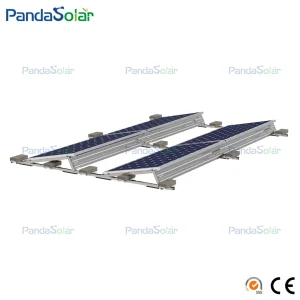
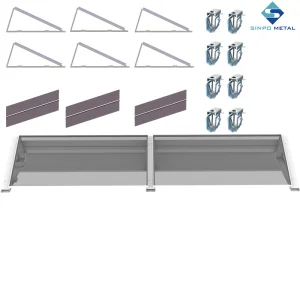
Ideal for commercial concrete roofs where membrane penetration is prohibited.
Utilizes wind deflectors and concrete ballast blocks to secure structures. Often built with lightweight aluminum alloys (AL6005-T5) to minimize load impact on building foundations.
Engineered for utility-scale solar farms, built for varying soil profiles.
Utilizes either rammed concrete piles or screw ground anchors. Supports structures constructed from galvanized steel or high-tensile strength anodized aluminum, ensuring long spans and stability.
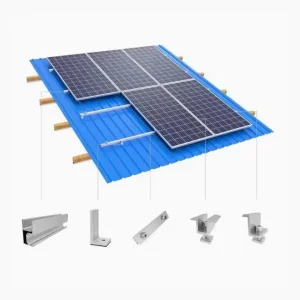
Designed for industrial warehouses with corrugated sheet metal roofs.
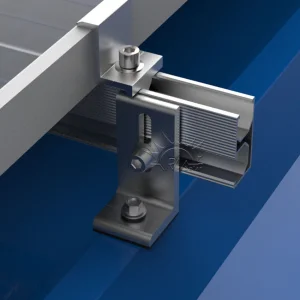
Mini-rail configurations attach directly to sheet metal crowns using self-drilling screws and EPDM waterproofing gaskets. This provides lightweight, cost-effective, and leak-proof installations.
International procurement managers must evaluate several factors beyond base costs to ensure long-term structural integrity and compliance with local building codes.
Ensure your supplier offers mill test certificates (MTC) trace-labeled to the aluminum batch. This ensures compliance with structural specifications and verifies that no scrap metal has been integrated during extrusion.
Request wind tunnel test reviews or finite element analysis (FEA) reports signed by a certified structural engineer. Verify compliance with regional standards such as AS/NZS 1170 (Australia/New Zealand), Eurocode 9, or ASCE 7 (USA).
Ask for fabrication tolerance limits. Standard extrusion dimensions should not deviate by more than +/- 0.2mm to ensure that mid clamps, end clamps, and joiners slide easily and fit securely on site.
Ask for salt spray testing documentation (ASTM B117 or ISO 9227) showing the brackets can withstand corrosivity levels matching the target site's conditions, particularly near coastal areas.
Procurement Tip: Request pre-punched grounding washers and integrated wire management slots within the rail profiles to reduce electrical safety concerns and save labor costs during installation.
Answers to common questions regarding structural load capacities, material selections, and site preparation.
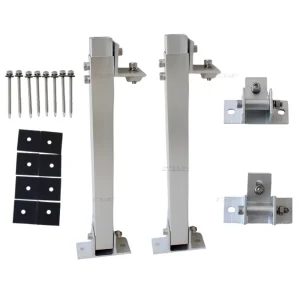
Examine specialized brackets, hardware adjustments, and custom installation accessories designed for various roofs and layouts.
 Soltrux Solar