Explore our premium selection of anodized aluminum and stainless steel PV structural components engineered to maximize longevity and minimize installation time.
As global energy grids decarbonize, residential and commercial rooftop solar installations have emerged as the fastest-scaling segment of renewable infrastructure.
In the modern photovoltaic (PV) era, the structural interface between the building envelope and the solar array represents a critical point of failure. Solar hook systems are not mere hardware components; they are the primary mechanical anchor points that transfer dynamic wind uplift loads, dead weight loads, and seismic shear stresses from the PV array directly to the building’s structural rafters. With the rapid expansion of solar adoption across regions with extreme meteorological patterns—such as typhoons in the Asia-Pacific region, heavy snow loads in Northern Europe, and cyclonic wind zones in Australia—the engineering demands on these hooks have heightened exponentially.
From a global commercial standpoint, the demand for highly durable, fast-installation roof hooks is driven by two primary macroeconomic forces: utility-scale distributed generation mandates and rising labor costs. In developed markets, manual installation hours represent a substantial percentage of total Balance of System (BoS) costs. Consequently, EPC contractors and system integrators prioritize pre-assembled, adjustable hook solutions that require minimal roof modifications, ensuring waterproofing integrity while reducing onsite time. Consequently, the selection of materials (such as SUS304 and structural aluminum alloys) and compliance with international standards (such as Eurocode 9, AS/NZS 1170, and UL 2703) have become critical procurement criteria.
Roof hook designs must withstand uplift forces exceeding 2.4 kPa. Modern engineering leverages Finite Element Analysis (FEA) to optimize stress distribution and prevent bending under localized pressure zones.
Sourcing grade SUS304 or SUS316 stainless steel prevents rust propagation in high-salinity coastal areas, guaranteeing an operational lifespan of 25+ years without structural degradation.
Double-adjustable mounting designs allow installers to easily compensate for uneven roof profiles, reducing alignment times by up to 35% compared to fixed-dimension hooks.
Delving deep into yield strengths, metallurgy, corrosion resistance, and compliance metrics that define reliable rooftop solar tracking and fixed bracket installations.
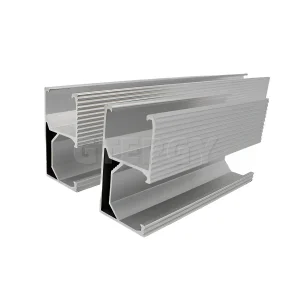
The primary raw material for roof hooks is Stainless Steel Grade 304 (SUS304) in a tempered condition or high-strength Aluminum Alloy AL6005-T5. Anodization of aluminum rails and components requires a minimum thickness of 10μm to 15μm (complying with standard AS 3715) to ensure durability against aggressive atmospheric pollutants and acidic precipitation.
When steel components interact with aluminum mounting rails, the electrochemical potential difference can lead to galvanic corrosion. To mitigate this risk, Soltrux engineered solutions utilize EPDM rubber isolation pads and premium stainless steel fasteners, ensuring electrical decoupling and structural integrity.
Soltrux Solar hooks undergo rigorous FEA simulations to analyze load paths, stress concentrations, and deformation limits. This ensures our designs satisfy the highest wind load classifications (such as wind zone 4 in Germany or wind region C/D in Australia), keeping roofs waterproof and systems secure.
Different regions present unique building methodologies. Sourcing components that match these local standards is essential to guarantee seamless installation.
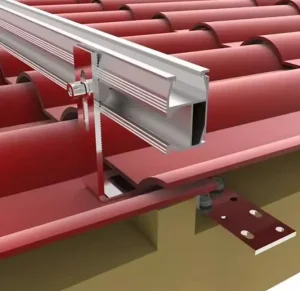
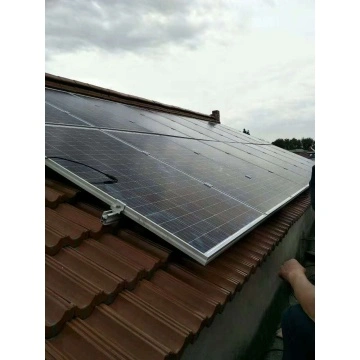
Commonly found in Germany, France, and Italy. These setups require dual-adjustable hooks that span above the overlapping tiles without resting directly on the clay structure, avoiding point loads and preventing tile cracking.
Predominantly applied in the US and Canada. Installations depend on thin, low-profile stainless steel hooks paired with robust aluminum flashing plates to ensure dynamic waterproofing at penetrations.
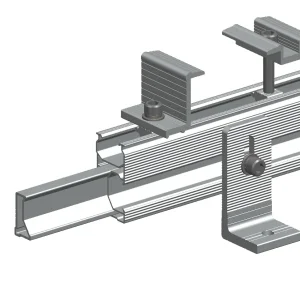
Widespread in South America, Southeast Asia, and Australia. These configurations use mini-rails directly secured to sheet metal ribs, complemented by heavy-duty L-feet or custom metal roof brackets.
A global leader in smart mounting structures, bridging the gap between mechanical innovation and photovoltaic field efficiency.
Dongguan Soltrux Solar Co., Ltd. is a leading China-based manufacturer specializing in smart solar mounting solutions for residential and commercial projects. Established in Dongguan, the company has built a strong reputation for delivering high-quality, durable, and adjustable solar brackets designed to maximize solar energy efficiency across diverse installations. Soltrux Solar combines advanced engineering with premium materials, including aluminum alloys and corrosion-resistant stainless steel, ensuring long-lasting performance even in harsh weather conditions.
The company offers a comprehensive range of mounting systems, including roof mounts, ground mounts, pole mounts, and custom adjustable solutions. With a focus on precision, reliability, and ease of installation, Dongguan Soltrux Solar serves both small-scale residential installations and large commercial solar projects. Their expert R&D and engineering teams continuously innovate, providing solutions compatible with fixed and tracking solar systems to enhance energy yield.
Committed to customer satisfaction and global standards, Dongguan Soltrux Solar exports its products worldwide, offering OEM and customized services tailored to specific project requirements. The company’s mission is to empower renewable energy adoption by providing efficient, sustainable, and cost-effective solar mounting solutions. With years of industry experience and a dedication to quality, Dongguan Soltrux Solar Co., Ltd. stands out as a trusted partner for solar installers, developers, and energy-conscious clients seeking reliable solar infrastructure.
As solar panel formats grow larger and output capacities increase, structural anchoring systems must adapt to handle higher mechanical stresses.
Transitioning from standard structural steel to grade SUS304 and lightweight aluminum alloys (AL6005-T5), reducing rooftop dead load while maintaining high structural safety factors.
Integrating dual-adjustable mechanism hooks with built-in waterproofing flashing sheets to eliminate the reliance on chemical sealants, minimizing long-term water leak risks.
Integrating electrical grounding pins directly into clamps and roof hooks, creating a unified earthing path across the solar array and reducing installation steps.
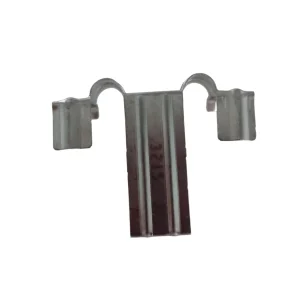
Optimizing mounting designs directly improves system yield. For example, using stainless steel water and mud drain clips prevents dirt collection along the lower frame edge of solar modules, maintaining optimal panel efficiency and minimizing hot-spot risks.
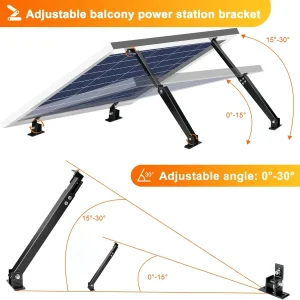
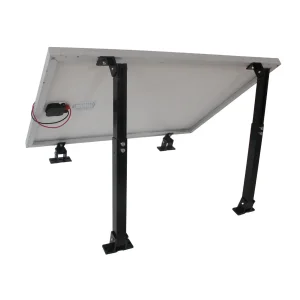
Choosing an optimized mounting design with high-quality anodized rails and adjustable tilt legs helps ensure stable PV array angles, maximizing annual energy yields across varied regional latitudes.
Critical answers for EPC planners, engineers, and distributors sourcing mounting systems from China.
SUS304 possesses superior mechanical performance under cyclic environmental loading. Its yield strength and high fatigue limits prevent the hook from bending under severe wind uplift and snow weight. In contrast, even galvanized carbon steel will oxidize over time when exposed to the elements, leading to structural failures and red rust stains on the roof.
Rooftops are rarely perfectly flat. Adjustable roof hooks offer both vertical and horizontal adjustments, allowing installers to level the mounting rails easily. This flexibility avoids point loads on clay tiles, protecting the tiles from damage and reducing installation times by eliminating the need to grind down rafters or tiles.
Aluminum alloys like AL6005-T5 form a natural oxide layer that protects against weathering. However, for industrial settings and coastal regions, an anodization layer of at least 10μm is necessary. This treatment shields the structural core from aggressive elements, maintaining the strength of the rails over a 25-year operational lifespan.
Rainwater often pools along the lower edge of low-tilt solar panels. As the water evaporates, it leaves behind dust and mud. This accumulation creates shading along the bottom cells, reducing efficiency and potentially leading to hot spots. Stainless steel drain clips siphon off this pooling water, keeping the panels clean and running efficiently.
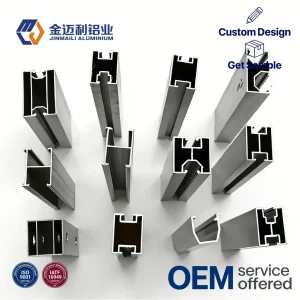
Soltrux Solar provides comprehensive OEM and ODM services, including customized hook dimensions, custom extrusion profiles for aluminum rails, specialized bracket tilt designs, and tailored packaging solutions. Their dedicated engineering team supports global project requirements by conducting structural calculations that comply with local standards (such as AS/NZS 1170, Eurocode, and UL requirements).
Review our specialized anchoring range designed to perform reliably across varied residential, commercial, and utility-scale solar projects.
 Soltrux Solar